
PROVA SUL CAMPO
Prova sul campo rappresenta “la voce” dei soci A.S.G.S. in merito a vecchie e nuove simulazioni che il mercato dei board-wargame offre. Una serie di pagine dove poter trovare piccole recensioni e/o resoconti di partite sui board-wargame che vengono giocati dal gruppo. Siamo sempre alla ricerca anche di collaboratori; se volete inviare articoli su giochi che amate e conoscete, contattate l’Amministratore. A partire dal gennaio 2018 si pubblichiamo 2 tipi di recensione sul Mensile: PLAYTEST EFFETTIVO e POTENZIALE DINAMICO. Il PE è una recensione basata su partite giocate; sarà quindi approfondita e potrà avvalersi di valutazioni anche da parte di altri giocatori/collaboratori. Il PD è una recensione basata sulla “percezione del potenziale dinamico” del gioco. Piazzamento di mappe e pedine, verifica dell’ambientazione e ricostruzione storica, lettura delle regole; in pratica si “legge il gioco” invece che giocarlo. E’ l’approccio tipico del collezionista di board-wargame… 
PLAYTEST EFFETTIVO
CHINA’S WAR 1931- 1945
GMT Games
Dal sito GMT:
Scatola
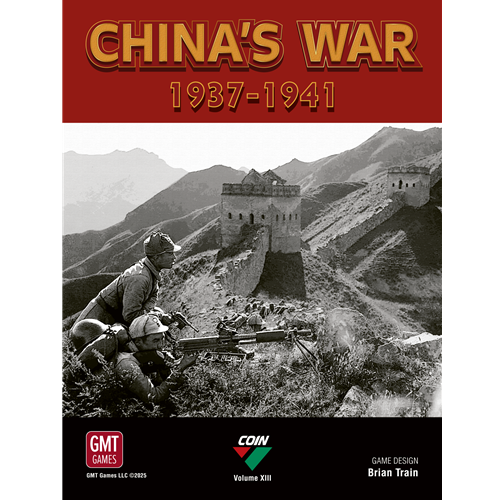
Dimensioni tipiche per la serie COIN – GMT. Intrigante la foto di copertina, con unità cinesi che si difendono lungo un tratto della grande muraglia! Sul retro le classiche informazioni per un possibile acquisto.
Mappe
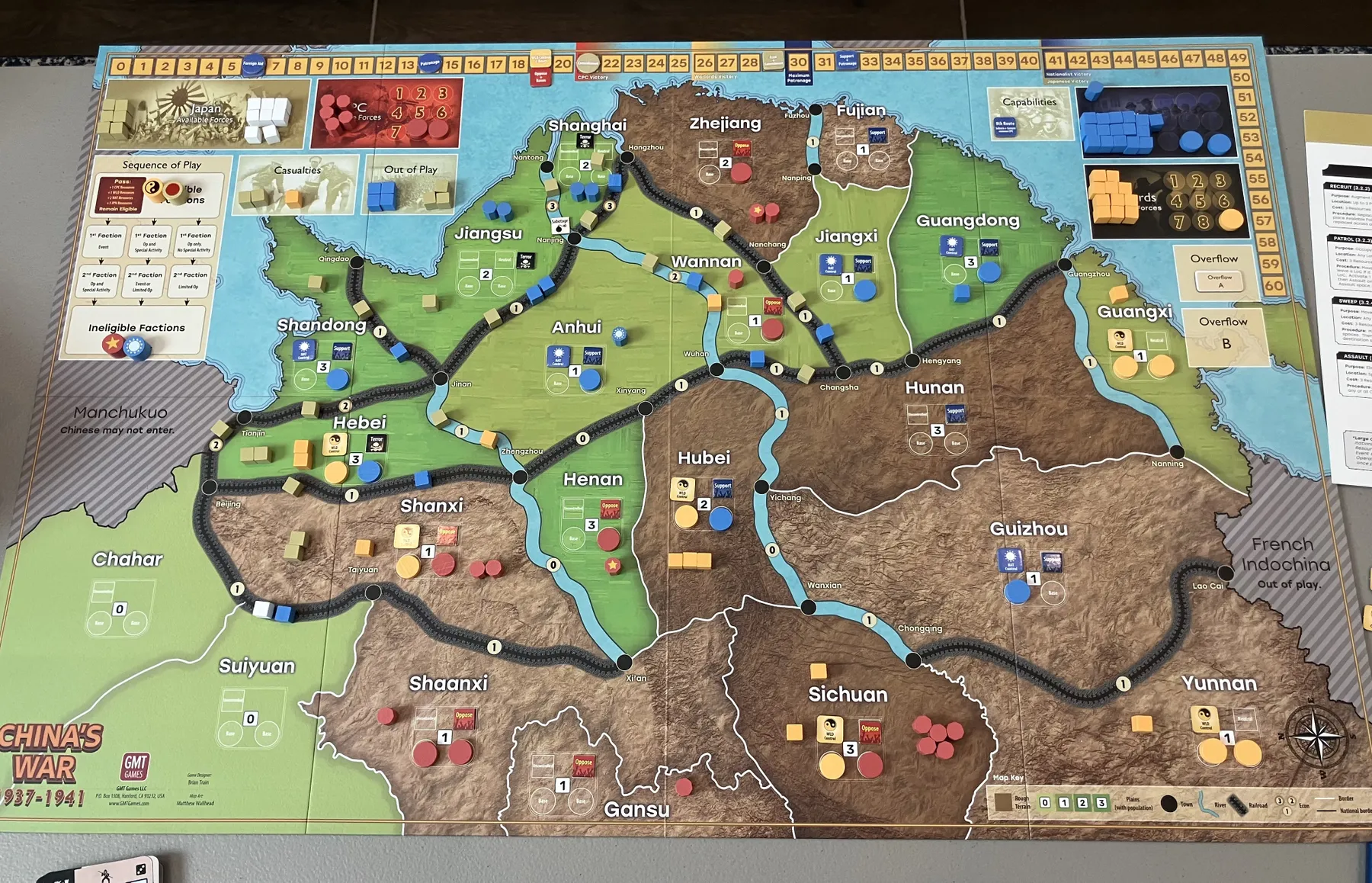
Dimensioni classiche, in cartoncino pesante. A prima vista la grafica non è accattivante! Le aree di gioco appaiono molto grandi, spaziose, forse anche troppo. I colori tenui, non fastidiosi, riescono a renderla accettabile. Ma quello che proprio non mi è piaciuto sono i fiumi e le ferrovie! Di grandi dimensioni, con colori forti, veramente poco belli. Peccato. Molto meglio i tempi e le grafiche di titoli quali FitL, ADP, Ghandi, Algeria. Il resto delle informazioni, ad ogni modo, è completo, con tabelline, sequenza di gioco, ecc.
Pedine, counters
Un unico set di pedine, con segnalini atti a registrare il controllo delle zone, terrorismo, supporto e opposizione, ecc. Belli, chiaeri. Due le buste che contengono i coloratissimi e oramai celebri blocchetti di legno, suddivisi per le quattro fazioni in gioco: Giappone, Nazionalisti, Signori della guerra, Cinesi.
Dadi
4 d6, di colore diverso.
Tabelle di gioco
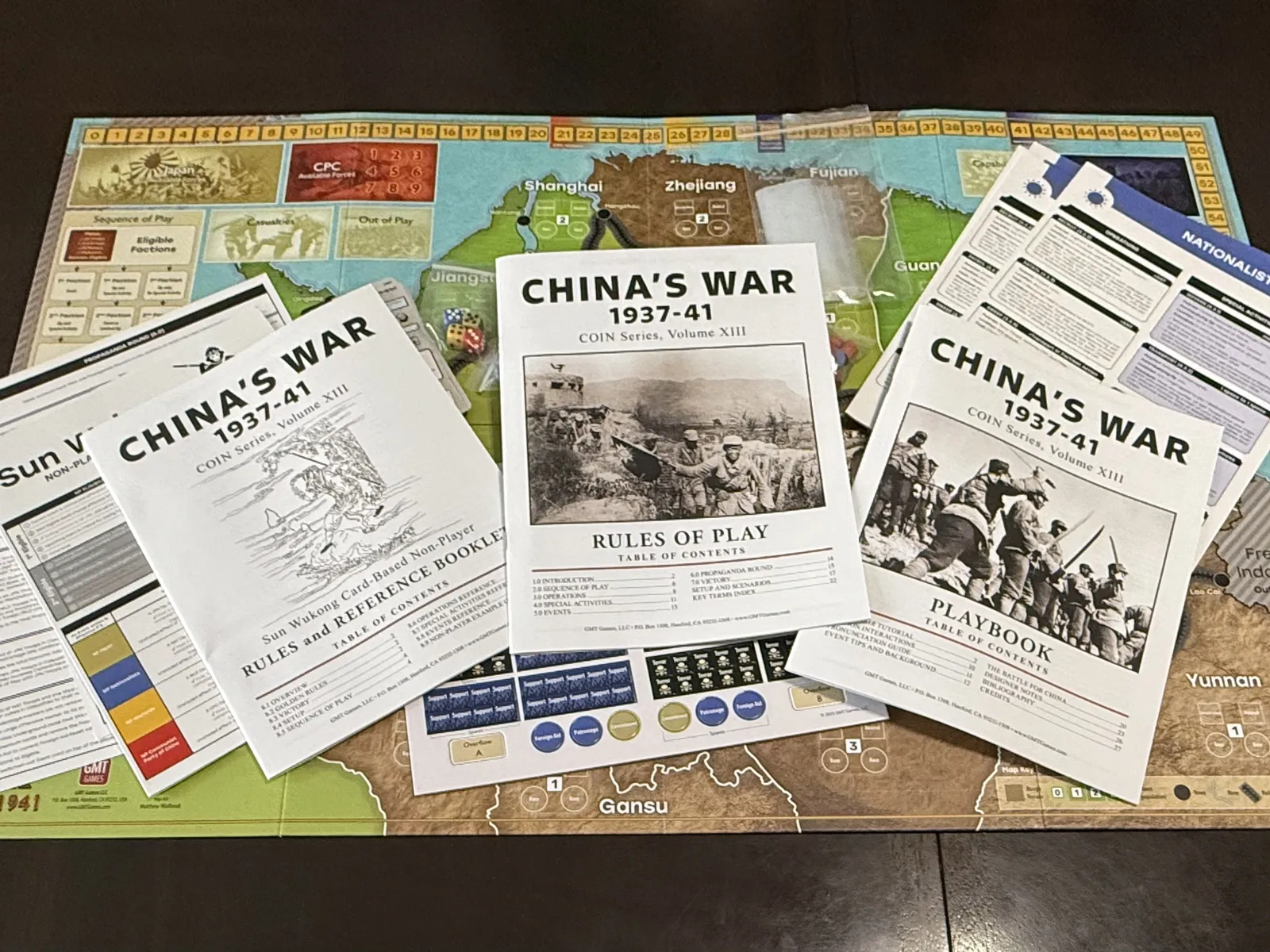
Ben otto le tabelle nella scatola; 4 classiche, che elencano Operazioni e Attività Speciali delle fazioni; 2 che riportano la sequenza del round di propaganda; 1 doppia tabella che elenca e spiega gli eventi delle carte; infine 1 tabella dedicata alle procedure per il sistema in solitario, definito Sun Wukong.
Rulebook / Playbook / Sun Wukong
Rules; 23 pagine, di cui solo 15 di regole effettive. Le restanti per il set up e indice. Chiare, oramai “stabili” come sistema generale COIN. Playbook; altre 26 pagine di Tutorial, interazioni fra le fazioni, e soprattutto di note storiche, in questo caso utilissime perchè il periodo / ambientazione non è molto trattato da testi in circolazione, perlomeno per quanto di mio possesso. Sun Waking; 26 infine le pagine che trattano il gioco in solitario, oramai una parte integrante dei COIN e sviluppato ulteriormente con le espansioni di FitL.
Impressioni di gioco
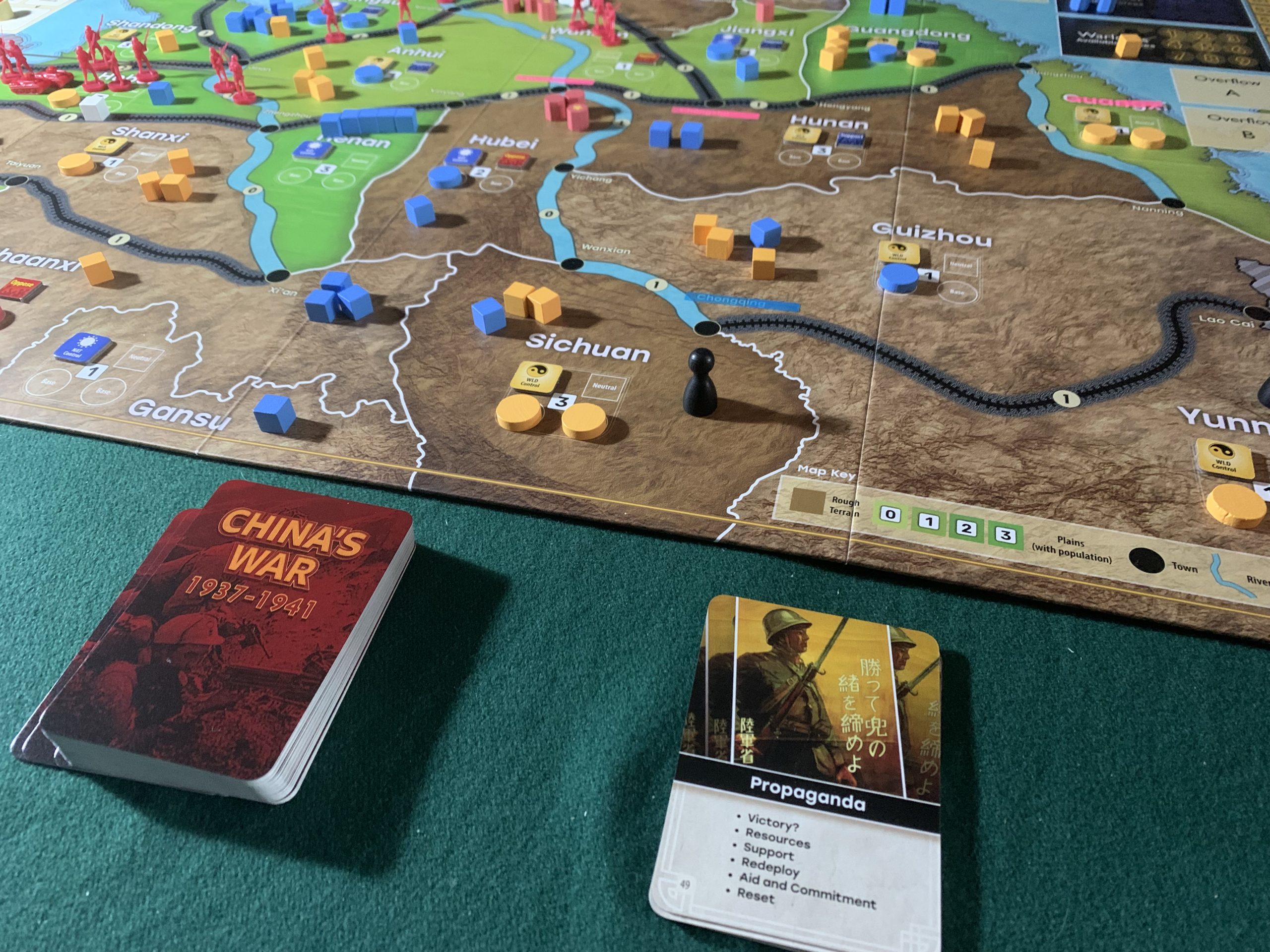
Immagine tratta da partita dell’autore; le miniature Giapponesi sono del gioco Axis &Allies Pacific
Intanto una semplice considerazione relativa ai materiali della scatole e del contenuto: con questo titolo la serie COIN torna ad offrire un prodotto di qualità tipica GMT. Ero rimasto deluso da ultimi titoli quali People Power o Brirish Way, quasi un “eurogame” come materiali e grafica. Con Red must Rebellion e ora China’s war gli acquirenti possono ritenersi soddisfatti, io credo. Poi, siamo di fronte ad un classico e solido COIN, con Operazioni, Attività Speciali e condizioni di vittoria asimmetriche; ogni fazione in gioco deve essere gestita a modo suo. Anche in questo titolo ci sono specifiche Operazioni e/o Attività che rendono possibili arrivare al punteggio vittoria: NAZIONALISTI; Reclutamento per Pacificazione/Supporto + Governo, per Patrocinio = +40. WARLORDS; Sweep per Controllo aree + Organize per piazzare basi = +25. COMUNIST OF CHINA; Agitate per Opposizione, Rally per piazzare Basi = +20. JAPAN; Patrol per occupare LOC/Econ + Commitment/Propaganda durante rese = +40.
La lettura del regolamento è piacevole e offre tutta una serie di Note del Disegnatore che sono illuminanti, specie per capire certe regole e la loro origine. Es: colonna sinistra, in basso, pag. 5; colonna sinistra in basso, pag. 8; colonna destra, pag. 11; colonna destra, pag. 15. Infine, altrettanto interessante il lungo articolo di Brian Train a fine Playbook sul corso della guerra, fitto di informazioni storiche che penso non tutti conosceranno.
Ho giocato una partita in solitario, atta a capire le regole e farmi un’idea delle possibili strategie di gioco. Come dicevo sopra, credo di poter affermare che CW è un ennesimo ottimo titolo ad opera di Brian Train. Non è un COIN con troppi fronzoli, anche se le varie Operazioni e Attività hanno aspetti diversi (legati alla situazione storica trattata) pur essendo oramai “classiche” per i COIN. Es: Rally, Assalto, ecc. Il Giappone appare molto forte fin da subito ma si trova di fronte un pò tutti: Nazionalisti, Comunisti e Signori della guerra.
Interessante e un pò “diversa” la risoluzione dei combattimenti, eseguita tramite una tabella che evidenzia le forze in campo, specifiche per ogni fazione in gioco. Es: un cubetto Truppa giapponese vale 2 Combat Value, mentre una guerriglia attiva vale 1. In aggiunta solo truppe giapponesi e NAT/WLD possono eseguire assalto, mentre le forze restanti si difendono solamente. Una sorta di combattimento “wargamistico”.
In definitiva un titolo assolutamente interessante, direi un must per chi ama i COIN. Il sottoscritto lo presenterà a SMGC 2026, www.sanmarinogame.com e PLAY – Bologna, a Maggio prossimo.
LINKS interessanti
Interview with Brian Train Designer of COIN Series Volume XII China’s War: 1937-1941 from GMT Games
Cosa mi è piaciuto: ambientazione, poco trattata dai wargame in generale.
Cosa mi ha deluso: grafica dei terreni, in particolare fiumi e ferrovie.
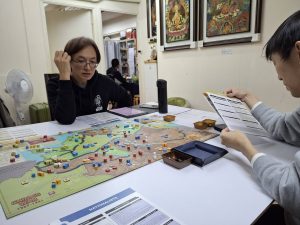
Allego di seguito anche una bella recensione di nuovo amico, Stephen Chan, che vive in Hong Kong; ho visto alcuni interessanti post su Facebook e ho chiesto una sua collaborazione. Direi che il risultato è notevole! Grazie Steven!
Sotto, alcune note inviate dall’Autore stesso, Brian Train! Una chicca…….; THANKS, BRIAN!
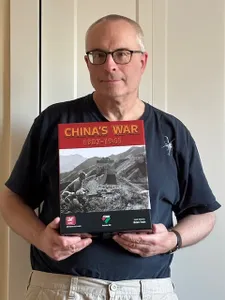
Because the game is a political-military design, played at a very high strategic level with undifferentiated wooden unmarked pieces, it was not necessary for me to chase a great level of detail on orders of battle or command structures. The highly variable quality of fighting forces engaged over time and the large time/space scale also seemed to nudge the game away from anything using a hex map, rigid turn-time scales or a highly detailed Order of Battle with counters with number ratings on them. (For those who are interested in that kind of treatment, the GR/D game War of Resistance has been available since 1998: with 20 map sections and over 2,200 counters you’d think that would be enough. But recently TKC Games is offering for The China Incident, a game with 25 maps and close to 5,000 counters, though not all of them will be in use at the same time!) What was important to me was to find material that described asymmetries between the four antagonistic factions (though three of them are ostensibly on the same side!) and what they sought out of the conflict, at least in the 1937-41 period. And while the mechanical Operations among the three non-insurgent factions are the same, their decisions and limitations in conducting them are different and their Special Activities are also quite different.
What Next?
This game was published as Volume 13 in the GMT COIN system series. The series covers all kinds of historical periods and situations, and this is the first one to deal with any theatre of World War Two. It’s also a bit different in that it begins with a foreign invasion, where most of the other volumes deal with internal civil conflicts or insurgencies, or resistance to pre-existing foreign occupations. New proposals for the COIN system continue to be made and I guess at some point there will be a final one. Volko Ruhnke has long since moved on from the system. At the end of 2025 I self-published my game O Canada which uses a variation on the COIN system, and this is my last essay in the system too.
LIBRO DEL MESE
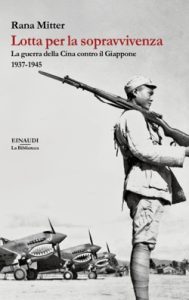
La storia degli otto devastanti anni della guerra tra Cina e Giappone, che avrebbe contato milioni di morti e rimodellato completamente l’Asia orientale. Uno dei piú tragici conflitti della Seconda guerra mondiale ha finalmente la magistrale indagine che merita. «Un fondamentale contributo all’unico aspetto della Seconda guerra mondiale di cui sapevamo veramente troppo poco, e che si dovrebbe conoscere molto meglio per comprendere appieno la nuova superpotenza cinese… Un modello di chiarezza e di stile». Antony Beevor, «The Times»
Bellissimo testo, assolutamente da avere a fianco del gioco; uno dei pochi resoconti completi su tale guerra, specie in lingua italiana.